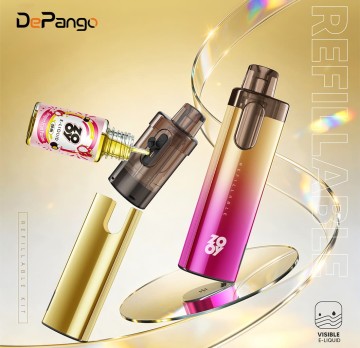



E - liquid: What Are the Mysterious Components Hidden Inside?
The good news is, there's no big mystery about e-juice. In the EU, ingredient listing on labels is mandatory, and the US will likely follow. Reputable manufacturers have been doing this for years.
Although it's easy to check the ingredients, the chemical names can be intimidating and don't always clearly explain what the substances are. This lack of clarity leads to false rumors, like the claim that E-Liquid contains antifreeze. In reality, most e-liquids have four main components.

Vegetable Glycerin (VG)
VG is the main component of modern e-liquids, making up as much as 80% by volume. It's the reason e-cigarettes can produce thick clouds of vapour. Derived from vegetable oils, VG is actually an alcohol, not an oil. It's non - toxic, colorless, odorless, and sweet - tasting. However, its high viscosity means high - VG liquids don't work well in older atomizers. Some e-liquids add water to VG to solve this. VG is common in food and medicine, and research shows no health risks. Liquids rich in VG produce lots of vapour but less throat hit.
Propylene Glycol (PG)
The part of e-liquid that isn't VG is often PG. Some e-liquids have more PG than VG, and these are better for clearomisers and older atomizers due to their lower viscosity. Like VG, PG is an alcohol, nearly odorless, and has a faint sweet taste. It's used in food, medicine, and even antifreeze, which is why some wrongly think e-juice has antifreeze. In fact, PG is non - toxic and used in antifreeze to reduce harm to children and pets.
Most people can safely inhale or swallow PG, but a small number are sensitive to it. If a high - PG e-liquid makes you uncomfortable, switch to one with more VG. PG produces less visible vapour than VG, so it's popular for discreet vaping and carries flavors better, providing a stronger throat hit.
Flavourings
Flavourings are what make vaping so appealing, offering a wide range of delicious tastes. The base e-liquid has little flavor, so food - grade additives are used. While most of the concerns about vaping's health effects come from flavourings, the industry has removed harmful ones like diacetyl. Avoid using supermarket food flavourings as they may contain harmful oils. Stick to vape - specific flavours for safety.
Nicotine
Most e-liquids contain nicotine, which makes vaping a great alternative to smoking. It satisfies nicotine cravings without burning tobacco. Despite its bad reputation, nicotine is relatively safe. It's the cigarette smoke that's harmful, not nicotine itself. Although toxic in high doses, it's hard to overdose while vaping. Vapers instinctively get the right amount.
Stick to e-liquids with these four main ingredients. Extra additives like vitamins and colorings don't improve your vape and may not be safe for inhalation. By choosing e-liquids wisely, you can enjoy a low - risk vaping experience. For more details, check out our guide on E - liquids.