Tobacco-flavored Vape products are still a big focus in the ever-changing world of vaping. When people shop for these, they’re usually looking for familiar tastes, consistent vapor production, and brands they can trust to manufacture reliably. But honestly, flavor alone doesn’t guarantee quality. A responsible supplier should be transparent—sharing clear ingredient lists, batch records, lab test results, and showing they follow proper production standards.
Dr. Konstantinos Farsalinos, a cardiologist and researcher focused on reducing tobacco harm, once said, “The best way to cut down the harm from smoking is, quite simply, to quit smoking.” That statement really hits home. When you’re looking at vaping products, it’s important to remember they’re not risk-free, and they’re not meant for non-smokers. A good supplier guide should focus on evidence—checking out the manufacturers’ track records—not just shiny packaging or flashy marketing. Also, keep in mind that regulations around age restrictions, product registration, labeling, and advertising can vary a lot from place to place.
In this guide, we look at companies based on practical indicators like how much experience they have in manufacturing, the strength of their quality control, transparency of testing, customer support quality, and export paperwork. Reliable suppliers are usually pretty open about their nicotine levels, base liquids, where their flavors come from, and how they store their products. They also take the time to give clear answers when customers ask tricky questions.
Of course, some info might be missing or out of date—public records can change, and companies’ claims might need to be independently verified. That’s just part of the game, not a reason to hide anything. So, think of this guide as a starting point, a helpful orientation rather than a strict ranking. Always double-check current regs and ask for up-to-date documents before making any business moves. At the end of the day, flavor matters, but hard evidence is even more important.
WHO estimates that about 1.3 billion people use tobacco worldwide. This figure shows demand, not a license to expand nicotine use. Tobacco-flavored vape products remain a sensitive, tightly regulated category. Adult consumers may seek familiar taste, while regulators examine youth access, emissions, labeling, and health claims. The market is complicated.
China plays a major export role through hardware production, component sourcing, and contract manufacturing. Suppliers serving legal markets must verify destination rules before accepting orders. For ODM Tobacco Flavored Vape projects, practical checks include ingredient records, batch identification, child-resistant packaging, and laboratory testing. Factory audits should examine clean-room practices, traceability, worker training, and complaint handling. Documentation matters as much as production speed. A polished sample means little without repeatable controls.
A credible top-10 guide should compare evidence, not only catalog size or quoted price. Buyers can request current certificates, test methods, export records, and corrective-action reports. They should also confirm whether tobacco flavor is permitted in the target jurisdiction. Rules change. A product accepted last year may face a different review today. China’s export strength is real, but reliability depends on compliance discipline and transparent communication. I would leave room for doubt: public supplier claims are not independent proof.
Selecting an OEM Tobacco Flavored Vape supplier requires more than a polished catalog. MOQ, production capacity, quality control, and TPD compliance deserve direct verification.
Ask whether the MOQ applies to one flavor, one device, or a complete shipment. A trial order of 500 units may reveal filling consistency, packaging accuracy, and delivery discipline. Small batches expose weaknesses. Capacity must match your forecast, not only the supplier’s largest monthly claim. Request production schedules, equipment details, and evidence of backup capacity. A factory promising 100,000 units monthly may struggle during peak seasons.
QC should be visible at every stage. Review incoming material checks, liquid weight records, battery inspections, leak tests, and final sampling rates. Ask for batch numbers, test reports, and retain samples. A carton with uneven seals is a small detail, but it can signal poor process control. TPD compliance, where applicable, should include technical documentation, ingredient records, emissions testing, labeling review, and required notification evidence. A certificate alone is not enough. Check whether documents match the exact product, nicotine strength, packaging, and destination market.
Some suppliers answer quickly but provide incomplete files. That is not proof of reliability. I would leave room for uncertainty and verify each claim independently. Independent laboratory testing can cost more, yet it may prevent a larger compliance failure later.
| Profile | Typical Product Focus | Indicative MOQ (units/SKU) | Indicative Monthly Capacity | Tobacco-Flavour Capability | Core QC Controls | TPD Readiness Evidence to Request | Best Fit |
|---|---|---|---|---|---|---|---|
| Profile 01 | Private-label disposable vape | 1,000–3,000 | 100,000–300,000 | Standard tobacco, Virginia, cigar, and mentholated tobacco profiles; sample approval normally required. | Incoming-material inspection, e-liquid weight check, leak testing, battery safety screening, and finished-goods sampling. | Ingredient list, nicotine-strength records, emissions test package, packaging artwork review, and proof of EU notification where applicable. | Market testing |
| Profile 02 | Pod system with replaceable cartridges | 2,000–5,000 | 80,000–250,000 | Tobacco blends can be tuned for freebase or nicotine-salt formulations, subject to local legal limits. | Pod fit and draw-resistance testing, coil-resistance verification, filling-volume control, leak testing, and shelf-life checks. | Device technical file, cartridge-volume declaration, child-resistant packaging evidence, health warnings, and batch traceability records. | Repeat orders |
| Profile 03 | High-volume closed-system device | 5,000–20,000 | 300,000–1,000,000 | Pre-developed tobacco flavour library with controlled mixing and batch-to-batch matching. | Automated assembly checks, barcode traceability, battery protection testing, e-liquid fill verification, and AQL-based final inspection. | Completed technical documentation, laboratory reports, product notifications, packaging compliance review, and change-control procedure. | Retail scale |
| Profile 04 | Rechargeable disposable vape | 3,000–10,000 | 150,000–500,000 | Tobacco and cooling-tobacco profiles with airflow and power calibration during product development. | Charging-cycle testing, overcharge and short-circuit protection checks, leakage tests, puff-consistency sampling, and drop testing. | Battery documentation, charger specifications, electrical safety reports, nicotine-content verification, and compliant consumer information. | Performance-focused |
| Profile 05 | E-liquid and filled-cartridge supplier | 500–2,000 bottles or cartridges | 50,000–200,000 units | Custom tobacco flavour development, nicotine-strength options, and retained-sample comparison. | Raw-material COA review, nicotine assay, density and fill-volume checks, microbiological controls where relevant, and batch retention. | Full formulation disclosure to the responsible party, analytical testing, toxicological information, and packaging/label review. | Flavour-led projects |
| Profile 06 | Large-format disposable vape | 3,000–10,000 | 200,000–700,000 | Tobacco flavour options may be available, but EU volume and nicotine restrictions must be checked before specification. | Fill-volume control, puff-output testing, thermal monitoring, leak testing, and carton-level quantity verification. | Written confirmation that the proposed volume, nicotine level, device design, and packaging comply with the destination market. | Non-EU markets |
| Profile 07 | OEM/ODM hardware and flavour development | 5,000–20,000 | 100,000–400,000 | New tobacco flavour development with pilot batches, sensory assessment, and specification lock. | Design verification, pilot-run approval, process capability monitoring, supplier qualification, and engineering change control. | Technical file ownership terms, test reports, risk assessment, notification responsibilities, and documented post-launch changes. | Custom products |
| Profile 08 | Small-batch compliant private label | 300–1,000 | 20,000–100,000 | Limited tobacco flavour catalogue with low-volume sampling and artwork support. | Manual line inspection, weight checks, visual packaging inspection, leak testing, and retained finished samples. | Evidence must be product-specific; a general factory certificate is not sufficient proof of TPD compliance. | Start-ups |
| Profile 09 | Export-oriented contract manufacturer | 2,000–10,000 | 200,000–800,000 | Multiple tobacco profiles with export documentation workflows and batch coding. | ISO-style quality procedures, incoming inspection, in-process checks, final AQL inspection, and complaint handling. | Market-specific product file, EU responsible-party coordination, notification records, laboratory reports, and recall procedure. | Multi-market sales |
| Profile 10 | Regulated-market specialist | 5,000–20,000 | 300,000–1,000,000 | Tobacco formulations selected with market restrictions, ingredient screening, and controlled flavour specifications. | Validated processes, calibrated instruments, batch release criteria, stability monitoring, traceability, and corrective-action records. | Product-specific notification confirmation, compliance declaration, analytical reports, packaging review, and documented regulatory change monitoring. | Compliance-critical orders |
A credible China tobacco-flavored vape supplier guide should examine ten profiles, not just factory photos. Each profile should show OEM and ODM capacity, production scale, quality controls, and export experience. Grand View Research estimated the global e-cigarette market at about USD 28.17 billion in 2023. That growth increases supplier choice, but it also makes verification harder.
Look for ISO 9001 systems, independent laboratory reports, traceable batch records, and certifications required in the target market. Ask whether the factory can provide flavor ingredient documentation and stability testing. A serious flavor portfolio should include dry tobacco, roasted tobacco, nutty tobacco, and mild tobacco blends. Samples should arrive with batch numbers. No vague promises.
Tips: Request a small pilot order before signing a large OEM or ODM contract. Compare the liquid color, throat feel, packaging accuracy, and test results. The phrase Best Tobacco Flavored Vape should never replace evidence. Supplier websites may look polished, yet documents can be outdated or incomplete. I would verify certification numbers directly and review recent audit dates. Some factories offer impressive customization but weak after-sales support. That weakness matters when flavors need adjustment or packaging changes. Use suppliers serving lawful, age-restricted markets, and confirm all claims with current local requirements.
China Top 10 Tobacco Flavored Vape Suppliers Guide
A credible supplier benchmark starts with the TPD nicotine ceiling: 20 mg/mL, equal to 2% nicotine. The European Commission’s Tobacco Products Directive also limits nicotine refills to 10 mL and cartridges to 2 mL. Suppliers should provide batch-specific laboratory reports, ingredient declarations, and child-resistant packaging evidence. Paperwork matters more than a polished catalogue.
Puff counts need careful reading. They are estimates, not fixed consumer outcomes. Battery output, airflow, liquid viscosity, and puff duration can change the result. ISO 20768:2018 uses controlled machine conditions, including a 55 mL puff volume and three-second puff duration. Its data supports repeatable emissions testing, but it does not predict every user’s experience. A supplier claiming 6,000 puffs without a stated protocol offers weak evidence.
Professional testing should also record nicotine concentration, aerosol yield, and device consistency. WHO technical reports repeatedly identify product variability as a key regulatory concern. Independent testing is therefore preferable to supplier-only certificates. In practice, even good comparisons can be imperfect. Puff-count labels remain difficult to standardize across disposable and refillable formats. Avaliating suppliers means checking the test method, laboratory accreditation, production date, and sample traceability—not only the headline number.
Regulatory checks should come before comparing any Tobacco-Flavored Vape supplier. In the EU, products must follow the Tobacco Products Directive (TPD) and local implementation rules. Nicotine liquid is generally limited to 20 mg/ml, while tanks are limited to 2 ml. Refill containers usually cannot exceed 10 ml. Packaging needs health warnings, ingredient details, child-resistant features, and tamper evidence. Manufacturers or importers must submit product information before market entry. Requirements may differ between member states.
In the United States, FDA Premarket Tobacco Product Application (PMTA) authorization is a separate hurdle. A supplier should provide evidence about ingredients, manufacturing controls, toxicology, emissions, and population health effects. A product should not be marketed legally without the required FDA authorization.
Ask for current regulatory documents, not a polished sales sheet. Verify the legal entity, production address, batch records, and laboratory methods. This is where practical experience matters. Paperwork can still hide gaps.
Tips: Request a compliance file for each flavor and nicotine strength. Check whether test results match the exact product, bottle, and batch. Confirm warning labels before ordering samples. Keep written records of every claim. Independent legal review is wise, because TPD compliant
is not a universal certificate. I would also question suppliers promising instant approval; real review is slower and sometimes inconclusive.
China Top 10 Tobacco Flavored Vape Suppliers Guide
A commercial comparison should begin with compliance, not price. Tobacco-flavored vape products may face different rules across countries, so buyers should verify local authorization before ordering. In permitted markets, supplier quotations commonly show MOQs from 500 to 5,000 units. Lower MOQs may carry higher unit costs. Ask for ingredient records, laboratory reports, batch numbers, and packaging samples. Evidence matters.
Lead time often ranges from 15 to 35 working days after artwork approval and deposit payment. Sample preparation may take three to seven working days. Pricing depends on device type, battery capacity, liquid volume, packaging, and testing requirements. Indicative quotations can range from 2.20 to 6.80 US dollars per unit, excluding freight, duties, and compliance services. Prices can move quickly.
Export data needs careful reading. Compare shipment frequency, destination markets, declared values, product descriptions, and customs classifications. A high shipment count does not prove reliable production. Some records combine different product categories. I would request recent commercial invoices and inspection reports before ranking a supplier. That step is slower, but safer. Payment terms, replacement policies, and carton specifications also affect the real landed cost. One overlooked detail is after-sales handling; a low quotation becomes expensive when defective units lack a clear resolution process.
Selecting a reliable tobacco-flavored vape supplier in China requires more than comparing catalogs and quoted prices. Due diligence should begin with current Certificates of Analysis, or COAs, for every proposed formulation. Check the laboratory identity, test date, lot number, and tested ingredients. Confirm that the COA matches the physical sample. A polished certificate is not proof of consistent production.
Request samples from several batches, not one carefully prepared unit. Record the liquid appearance, packaging condition, labeling details, and device performance under controlled conditions. Keep sealed samples for later comparison. Factory audits should examine incoming-material controls, mixing records, equipment cleaning, worker training, and complaint handling. Photos are useful, but an independent on-site audit offers stronger evidence. Small details matter.
Batch traceability should connect raw materials, production dates, operators, equipment, testing results, and shipment records. Ask the supplier to demonstrate this process using a real lot code, with sensitive commercial information removed. A common review mistake is accepting copied documents without checking dates or matching identifiers. Another is overlooking corrective-action records after failed tests. That deserves attention. Requirements also differ by market, so qualified local professionals should review applicable standards before purchasing. No audit replaces continuous monitoring, and even a careful assessment can miss a weakness. Suppliers should therefore agree to periodic testing, documented change notifications, and prompt access to updated records.
This chart shows the core evidence checkpoints commonly used when evaluating vape suppliers: four COA verification points, six factory-audit areas, five sample-validation checks, and five batch-traceability records. The figures represent checklist coverage, not supplier performance or rankings.
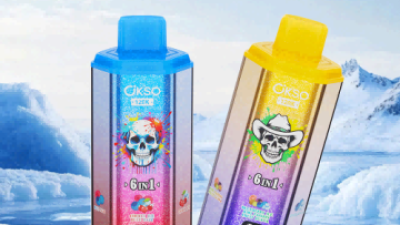
The 6-in-1 120K disposable vape offers a fresh approach to flavor variety and everyday convenience. Designed with multiple flavor options in one compact device, it allows users to switch between different taste profiles without carrying several separate units. This makes it suitable for adults seeking a flexible vaping experience at home, while traveling, or during busy daily routines.
A smart LED screen provides useful information at a glance, helping users monitor the device more easily. Its multi-mode functionality adds further flexibility, allowing the experience to be adjusted according to personal preferences. With a stated capacity of up to 120,000 puffs, the device is built for extended use and can be an attractive option for wholesale buyers looking for a high-capacity product with broad consumer appeal.
The combination of flavor selection, convenient operation, visual status information, and long-lasting capacity gives this 6-in-1 device a distinctive position in the disposable vape market. Wholesale customers should confirm product specifications, age restrictions, labeling requirements, and local regulations before purchase or distribution.
Nicotine liquid is generally limited to 20 mg/mL, equal to 2% nicotine. Local rules may add requirements.
Nicotine refill containers usually cannot exceed 10 mL. Cartridges and tanks are generally limited to 2 mL.
Request batch-specific laboratory reports, ingredient lists, packaging evidence, and production records. A polished catalogue proves very little.
Puff counts are estimates, not fixed outcomes. Battery power, airflow, liquid thickness, and puff duration change results.
The method uses controlled conditions, including 55 mL puffs and three-second durations. It improves comparison, but cannot predict every user’s experience.
The supplier should state the test protocol, sample details, and laboratory information. A large number without methods is weak evidence.
Testing should examine nicotine concentration, aerosol yield, and device consistency. Independent results are preferable to supplier-only certificates.
Match reports to the exact flavor, strength, bottle, and batch. Check warning labels, legal documents, addresses, and sample traceability.
Products may require premarket authorization and supporting evidence on ingredients, manufacturing, emissions, and health effects. Approval is not instant.
No. Compliance depends on the market and product details. I would verify every claim, because paperwork can still hide gaps.
This guide to Tobacco Flavored Vape suppliers in China presents a practical framework for evaluating manufacturers serving international markets. It examines China’s role in global tobacco-product exports, while focusing on responsible sourcing, transparent documentation, production capacity, minimum order quantities, quality-control systems, OEM/ODM capabilities, and flavor development. Supplier profiles are assessed through certifications, factory resources, export experience, and the ability to provide consistent products for regulated markets.
The guide also compares key product benchmarks, including nicotine limits such as the EU TPD cap of 20 mg/mL, stated puff counts, and ISO 20768 testing. It highlights essential regulatory checks for EU TPD requirements and FDA premarket authorization, alongside commercial factors such as pricing, lead times, order volumes, and export records. Before placing an order, buyers should request current COAs, product samples, factory-audit evidence, batch traceability records, and clear compliance documentation to support safe, lawful, and reliable procurement.